
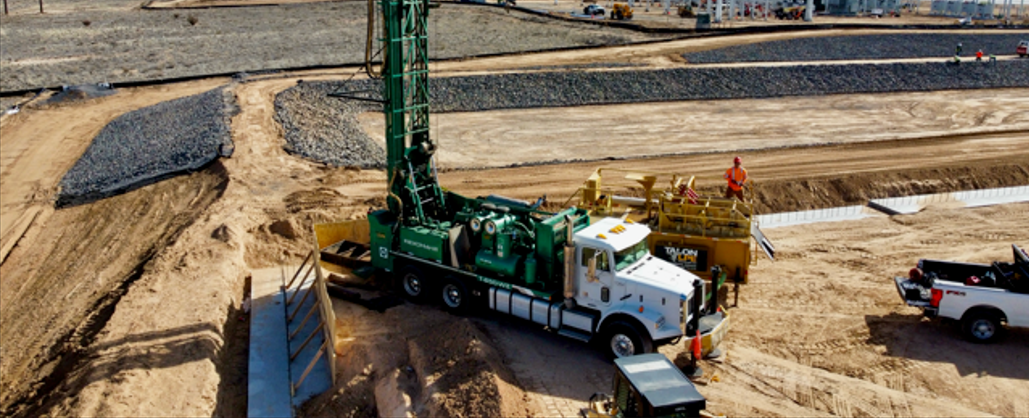
When it comes to environmental drilling, there is no such thing as a one-size-fits-all solution.
Every project brings a different combination of geology, groundwater conditions, target depths, sampling requirements, site access, and environmental objectives. The drill rig and drilling method that work perfectly at one site may not be the right choice a few miles down the road.
That is why successful environmental drilling starts before the rig ever begins turning. It starts with understanding the site and selecting the right equipment for the job.
Start With the Site, Not the Rig
Choosing a drilling method involves much more than determining how deep the boring needs to go. Project teams may also need to consider:
- Soil and rock formations
- Depth to groundwater
- Type and quality of samples required
- Monitoring or recovery well design
- Borehole diameter
- Access and overhead restrictions
- Potential contaminants
- Drilling waste and containment requirements
- Overall project objectives
In Texas and New Mexico alone, drilling crews can encounter everything from sand and clay to gravel, caliche, and consolidated rock. Those changing subsurface conditions are exactly why having multiple drilling capabilities matters.
At Talon/LPE, our environmental drilling capabilities include air rotary, mud rotary, hollow stem auger, and direct push methods, along with equipment designed for both conventional and limited-access projects.
Direct Push: Efficient Sampling and Limited Access
Direct push technology uses hydraulic or pneumatic force to advance tooling into the subsurface. It can be an efficient option for collecting soil, groundwater, and soil gas samples and can also be used to install small diameter wells.
One of the advantages of direct push equipment is versatility. Smaller Geoprobe® platforms can access locations where larger drilling rigs may not be practical.
However, direct push is not the answer for every site. Hard, rocky, or highly consolidated formations can limit penetration, and projects requiring larger or deeper boreholes may call for another drilling method.
Hollow Stem Auger: Versatility for Sampling and Well Installation
Hollow stem auger drilling is another valuable tool for environmental investigations.
As the auger advances, cuttings travel to the surface along the auger flights. The hollow center allows sampling equipment to be advanced through the auger, making it possible to collect samples at targeted depths. Monitoring wells can also be installed through the hollow stem.
Hollow stem auger drilling can be particularly useful in unconsolidated formations and on projects where representative sampling is an important objective.
But when the geology changes and crews encounter highly consolidated materials or rock, a rotary method may be a better solution.
Air Rotary: Power for Tougher Formations
When environmental drilling requires penetration into consolidated formations or bedrock, air rotary drilling can provide an efficient solution.
Compressed air is used as the circulation medium to carry drill cuttings to the surface while the bit advances the borehole. This can allow for efficient penetration in harder formations.
The same method, however, may not be ideal in loose or unstable formations. Unconsolidated sands and gravels can create borehole stability challenges, making another drilling approach more appropriate.
Mud Rotary: Helping Maintain Borehole Stability
Mud rotary drilling operates on a similar principle to air rotary but uses water and/or drilling additives as the circulation medium.
The drilling fluid carries cuttings to the surface while also helping support the borehole. This can make mud rotary an effective choice in certain unconsolidated formations where maintaining borehole stability is a concern.
Like every drilling method, mud rotary comes with project specific considerations, including management of drilling fluids and investigation derived waste.
Sometimes the Right Answer Is More Than One Method
One of the most important parts of environmental drilling is being prepared for what lies beneath the surface.
Even with historical information and a well-developed drilling plan, subsurface conditions can change as a boring advances. A project that begins with one drilling method may require a different approach as conditions change.
That is where experience and equipment versatility can make a significant difference.
The goal should not be to make one rig work for every project. The goal is to use the right equipment and drilling method to safely and efficiently collect the information needed to make sound environmental decisions.
The Right Rig for the Right Project
Environmental drilling is often one of the first opportunities to understand what is actually happening beneath a site. The quality of that work can influence everything that follows from site characterization and monitoring to remediation planning and regulatory decision-making.
At Talon/LPE, our drilling teams work with environmental professionals to evaluate site conditions, project objectives, and subsurface challenges before selecting the appropriate drilling approach.
With multiple drilling methods and equipment options available, Talon/LPE can adapt to a wide range of environmental drilling projects and site conditions.
Because the best drill rig isn't always the biggest or most powerful one. It's the one that's right for the project.
To learn more about Talon/LPE's environmental drilling capabilities or discuss an upcoming project, contact our team today.