
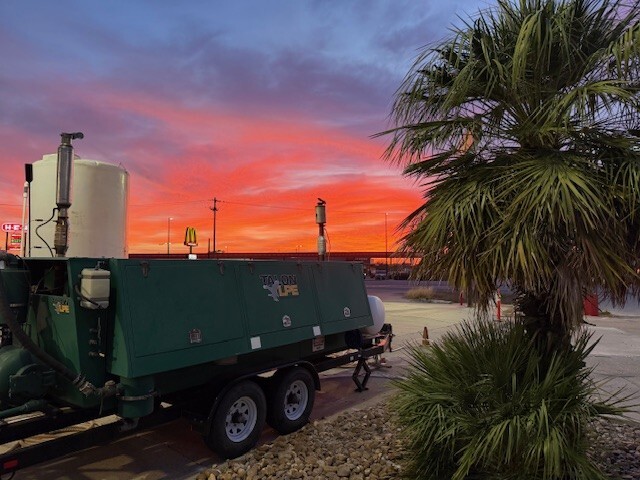
Convenience stores play an important role in communities across the country, but many sites have a long history of fuel storage and dispensing operations. Over time, leaks from underground storage tanks, piping systems, dispensers, or fuel handling activities can result in petroleum contamination impacting soil and groundwater.
When contamination is discovered, site owners often face the challenge of balancing environmental cleanup with ongoing business operations. One of the most effective technologies available for addressing petroleum contamination at active convenience stores is Mobile Dual Phase Extraction, commonly known as MDPE.
Understanding LPST Contamination
Leaking Petroleum Storage Tank (LPST) sites typically involve gasoline, diesel, or other petroleum products that have migrated into surrounding soil and groundwater. Common contaminants may include:
- Benzene
- Toluene
- Ethylbenzene
- Xylenes
- Methyl tertiary butyl ether (MTBE)
- Petroleum hydrocarbons
If left untreated, these contaminants can continue to spread, increasing environmental liability and potentially extending cleanup timelines.
What Is Mobile Dual Phase Extraction?
Mobile Dual Phase Extraction is a remediation technology designed to simultaneously remove contaminated groundwater, petroleum product, soil vapors, and dissolved contaminants from the subsurface.
Unlike permanent remediation systems that may require significant infrastructure and long term operation, MDPE systems are trailer mounted and can be deployed quickly to sites requiring active remediation.
The process uses vacuum assisted extraction to remove both liquid and vapor phase contaminants from the subsurface. Extracted materials are then separated and managed through treatment systems designed to safely handle recovered petroleum products and impacted groundwater.
Why MDPE Works Well at Convenience Stores
Convenience stores often present unique remediation challenges. Many sites remain active during cleanup activities and have limited space available for remediation equipment.
MDPE technology offers several advantages:
Rapid Contaminant Removal
MDPE systems can remove significant amounts of petroleum mass during a single event. This active approach often accelerates cleanup compared to passive remediation methods alone.
Minimal Impact to Business Operations
Because the equipment is mobile and temporary, remediation activities can often be performed with minimal disruption to customers and daily operations.
Effective Soil and Groundwater Treatment
Petroleum releases rarely impact only one environmental medium. MDPE addresses both soil and groundwater contamination simultaneously, making it an efficient solution for many LPST sites.
Flexible Deployment
Each convenience store site is different. MDPE systems can be adjusted to target site specific conditions, contaminant concentrations, and cleanup objectives.
Common Situations Where MDPE Is Recommended
Environmental professionals may recommend MDPE when:
- Free product is present in monitoring wells
- Elevated petroleum concentrations remain after source removal
- Groundwater impacts require active remediation
- Soil vapor concerns are present
- Regulatory agencies require accelerated cleanup
- Site closure objectives are not being achieved through natural attenuation alone
MDPE is often used as part of a larger remediation strategy that may also include monitoring, product recovery, injection technologies, or risk based corrective actions.
The Benefits of Early Action
One of the most important factors in successful LPST remediation is acting quickly after contamination is identified.
Early remediation can:
- Reduce contaminant migration
- Lower long term cleanup costs
- Improve regulatory compliance
- Accelerate site closure
- Reduce environmental liability
- Protect nearby receptors and groundwater resources
Addressing contamination early often provides site owners with more flexibility and better long term outcomes.
Why Experience Matters
Every LPST site has unique geology, hydrogeology, contaminant characteristics, and regulatory requirements. Successful remediation requires a thorough understanding of site conditions and the ability to select technologies that deliver measurable results.
At Talon LPE, our remediation professionals have extensive experience evaluating petroleum impacted sites and implementing effective cleanup strategies throughout Texas and New Mexico. Our MDPE systems have been successfully deployed at convenience stores, retail fuel stations, industrial facilities, and petroleum release sites across the region.
How Talon LPE Can Help
For more than 28 years, Talon LPE has provided environmental assessment, remediation, compliance, and corrective action services for LPST sites throughout the Southern United States.
Our mobile remediation systems are designed to provide efficient contaminant removal while minimizing disruption to ongoing operations. Whether you are responding to a newly discovered release, working through regulatory requirements, or seeking site closure, our team can develop a practical remediation strategy tailored to your site.
Contact Talon LPE today to learn how our MDPE services can help move your LPST project closer to closure.