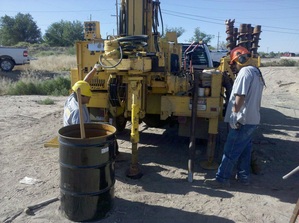
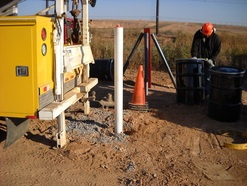
Dust containment systems are designed to collect airborne contaminants (e.g. dust particles, dirt, rocks, etc.) when produced by air rotary drilling methods.
Using direct push drilling like GeoProbe systems, companies can identify the vertical & lateral extent of spill's suspected contamination.
Weather hazards are always a concern when drilling. All of these conditions can prove hazardous to drilling crews, making safety and awareness are vital.
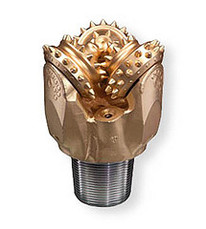
A critical decision in the environmental drilling process is using the proper rotary bits of the several options to choose from.
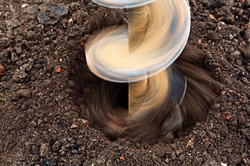
Two common forms of drilling are solid stem auger and hollow stem auger. Each has its own uses, advantages, and disadvantages.
You need a permit to drill a groundwater monitoring well in certain Groundwater Conservation Districts, established by local groundwater conservation districts.
Lubricants must meet certain guidelines to prevent contaminating the borehole and contamination of the surface during the drilling process.
Mud rotary drilling and sonic drilling are the top options when creating deeper boreholes or drilling into difficult geologic formations.
Nested wells make it easier to monitor subsurface water at different levels in an area compared to an individual well.
The clearest way to show a property is free of contamination is to run chemical analyses on soil, starting with sampling and soil boring.